Last updated: June 2024

The IoT layer in a hotel room
A smart hotel room is built around connected hardware: sensors, actuators and controllers that communicate over a local network. The central concept is that room systems — lighting, air conditioning, blinds, television, door lock — can receive and respond to signals from a central management system or from guest-facing devices. In a basic configuration, this means the HVAC shuts off when the room door is left open for a defined period. In more integrated configurations, a single tablet interface controls all in-room functions.
The IoT layer sits between the physical room hardware and the property management system. Each connected device reports its status and receives commands through a hub or gateway, which in turn communicates with the hotel's central system. The degree to which this data is accessible to guests (to set their own preferences) versus hotel operations (to monitor energy use) varies by implementation.
In-room control systems
Tablet interfaces
Fixed tablets mounted beside the bed or on the desk have become a common way to consolidate in-room controls. Rather than a bank of wall switches and a television remote, the guest interacts with a single screen that provides access to lighting presets, room temperature, blackout blinds, television channels and room service ordering. The tablet also typically provides hotel information — restaurant menus, spa booking, local directions — that would otherwise be printed in a folder.
Tablets at this function are generally Android devices running custom kiosk software provided by a hospitality technology vendor. The hardware is fixed (not removable by guests) and connected to the hotel network rather than the public internet. Vendors active in this space in Spain include Nonius and Intelity, among others, though configurations differ by hotel group contract.
Voice interfaces
A smaller number of hotel properties have deployed voice-controlled assistants in rooms. These devices allow guests to request information, adjust settings or contact the front desk by voice command. Deployment in Spain has been more cautious than in some other markets, partly due to multilingual guest populations and partly due to data handling considerations around always-on microphones in private spaces.
Climate and lighting automation
Energy management is among the most practically significant applications of room IoT in Spain. With air conditioning representing a large proportion of energy use in Mediterranean-climate hotels — particularly during summer — automated control of HVAC based on room occupancy, door and window status, and outdoor temperature offers meaningful operational savings.
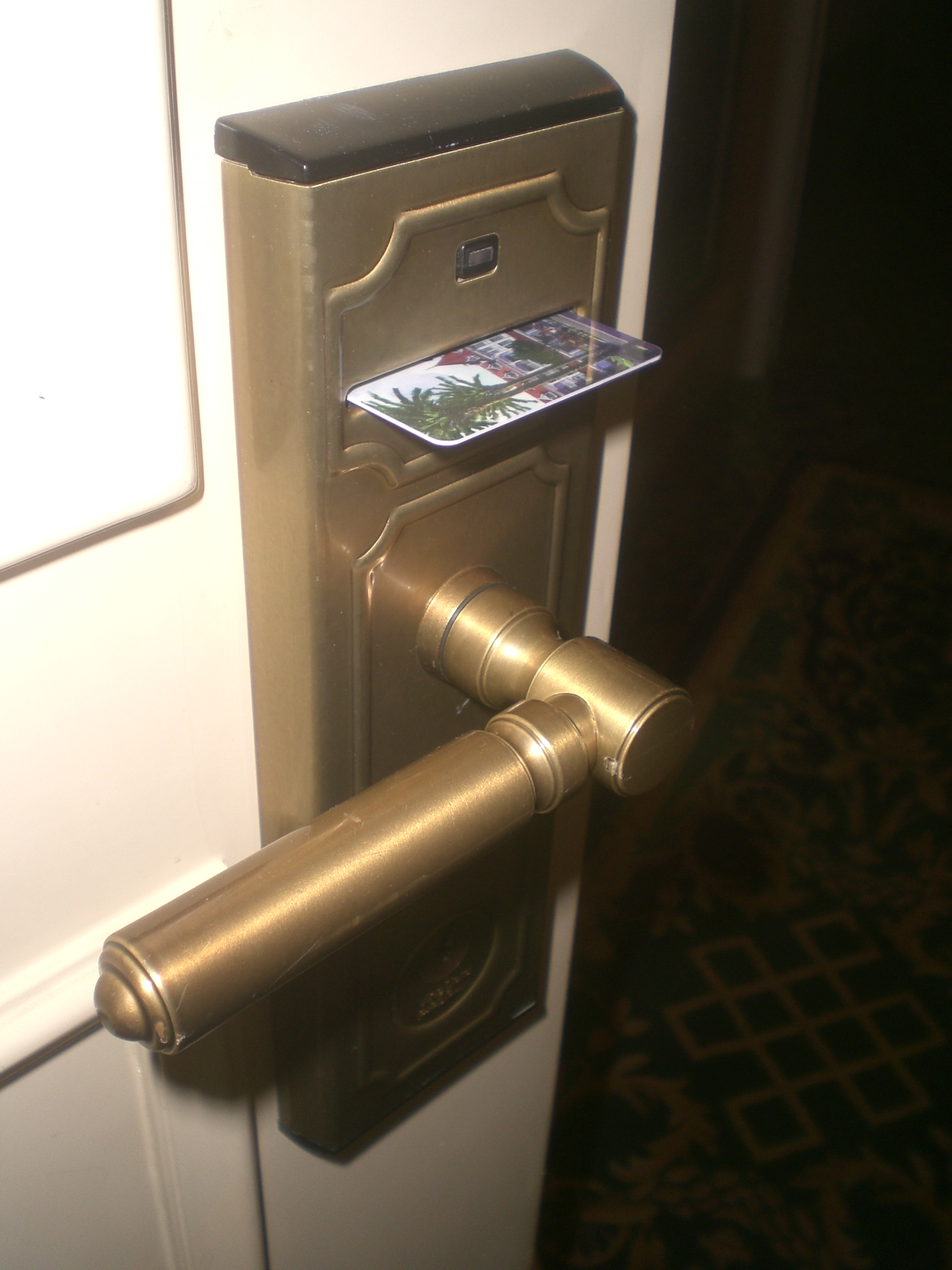
Standard implementations use occupancy sensors (typically passive infrared) or key-card-activated systems to switch rooms to an energy-saving mode when unoccupied. More sophisticated configurations monitor balcony door status and outdoor temperature to modulate the cooling load continuously rather than simply switching between full operation and standby.
Keyless entry
Mobile key systems eliminate the physical room card for guests who choose to use them. The guest's smartphone carries a digital credential issued by the hotel system; this credential is read by the door lock via Bluetooth Low Energy (BLE) or NFC when the phone is held close to the lock. The credential can be issued before the guest arrives and deactivated at checkout without any physical interaction.
From an operational perspective, mobile keys remove the cost and time associated with physical card production and magnetic stripe encoding, reduce the frequency of guests returning to the front desk when a card has been demagnetised, and allow the hotel to update access permissions (room changes, late checkout extension) without reissuing hardware. The guest carries access to the room, elevator floors and gym or spa on the same device as their booking confirmation and boarding pass.
Mobile key adoption requires guests to install a specific application — or for the hotel to issue credentials through a universal wallet — which introduces a friction point that not all guests are willing to accept. Most properties offering mobile keys continue to issue physical cards on request.
Television and entertainment systems
In-room televisions in contemporary hotels have shifted from analogue cable distribution to IP-based IPTV systems. This allows the property to deliver a managed channel lineup, on-demand content, hotel information screens and casting from personal devices (phone, laptop) to the television, all over the hotel's internal network. Cast functionality — allowing guests to stream content from their own subscriptions to the room TV without entering credentials into the television — has become a common guest expectation in full-service hotels.
Network requirements for smart rooms
Connected room hardware requires a structured local network separate from the guest Wi-Fi network. Devices on the IoT network should not be accessible to or from guest devices, and the management traffic between room hardware and the hotel system needs reliable low-latency connectivity. This requirement influences how hotels approach their overall network architecture — addressed in detail in the connectivity standards article.
External references
For technical context on IoT standards applicable to hospitality, the ETSI standards body publishes documentation relevant to IoT device communication protocols. The HospitalityNet resource covers vendor developments in hotel technology. Turespaña's innovation reports, accessible via ite.tourspain.es, provide data on Spanish hotel technology investment trends.